
Every day, your car’s paint is under attack. From gravel kicked up on highways to the sun’s harsh UV rays and even the occasional rogue shopping cart, a vehicle’s finish faces constant threats. Over time, these hazards lead to unsightly chips, scratches, fading, and stains that drag down your car’s appearance and value. Paint Protection Film (PPF) offers a modern solution to this age-old problem. Also known as a “clear bra,” PPF is a transparent urethane film applied to a car’s painted surfaces as a sacrificial shield. In essence, it’s like giving your car a nearly invisible armor – one that absorbs damage so your factory paint stays flawless. If you want to keep your vehicle looking newer longer and preserve its value, PPF is a compelling, professional-grade defense. In this article, we’ll explain why you need paint protection film for your car, how it works, and how it compares to alternatives.
What Is PPF and How Does It Work
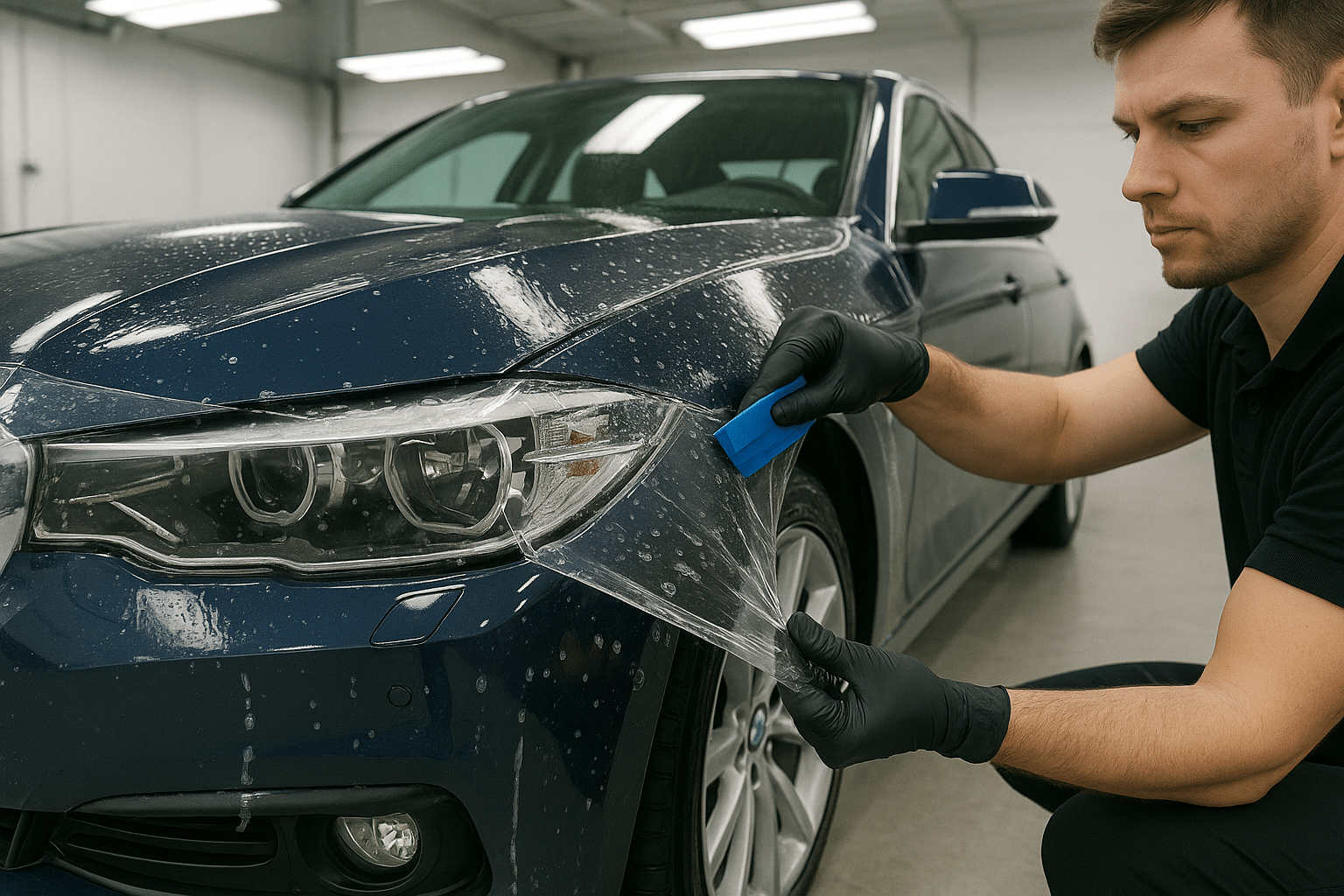
Paint Protection Film is a thin, flexible polyurethane film that is precision-cut and applied over a vehicle’s paint to guard it against external damage. It was originally developed for military applications and later adapted for consumer vehicles. Modern PPF is crystal clear and ultra-thin (typically 6–8 mils thick, or about 0.006–0.008 inches), so it does not alter your car’s appearance when installed correctly. In fact, high-quality PPF is virtually invisible on the paint and often enhances the gloss of your finish. According to Forbes (a global business magazine), paint protection film “is a thin layer of flexible material placed over a vehicle’s body panels to protect them from flying rocks or road debris”. This durable film wraps your car’s vulnerable areas (like the front bumper, hood, fenders, mirrors, and door edges) and absorbs impacts and abrasions that would otherwise chip or scratch the paint.
How does PPF work? It consists of multiple micro-layers, including a tough clear coat on top that provides UV resistance and even self-healing properties. If minor swirl marks or light scratches occur, the film’s specialized top layer can heal itself with a bit of heat (for example, from the sun or warm water), causing small abrasions to disappear. Underneath, the film’s elastic polymer middle layer cushions against pebbles and road debris, preventing paint chips. The bottom layer is an adhesive that securely bonds to the paint but can be safely removed later without damaging the underlying finish. Together, these layers create a resilient barrier that “freezes” your paint’s aging process by shielding it from both mechanical damage and environmental degradation (like oxidation and chemical staining). Importantly, modern PPF is engineered not to yellow or peel over time – early generations of clear bra had those issues, but today’s films use improved, non-yellowing adhesives and UV-resistant materials. High-end brands offer warranties ranging from 5 to 10 years, reflecting the film’s durability. In fact, many luxury automakers now apply PPF on high-impact areas of new cars at the factory (for example, behind wheel arches or on rocker panels) to ensure the paint stays pristine. In short, PPF is an invisible guard that keeps your car’s paint looking brand new by taking the brunt of damage so your clear coat doesn’t have to.

Benefits and Drawbacks of Paint Protection Film
Like any car care product, PPF comes with advantages as well as some downsides. Below are the key benefits of paint protection film and its potential drawbacks.
Benefits of PPF:
- Superior Paint Protection: Provides unmatched defense against rock chips, sand, and minor scratches by acting as a sacrificial clear shield. PPF takes the impact so your original paint remains unharmed.
- Self-Healing & Longevity: Minor scratches on the film self-heal with heat, keeping the surface smooth. A high-quality film can last 5–10 years before needing replacement, far longer than waxes or other temporary protections.
- Preserves Appearance and Value: PPF is virtually invisible, so it doesn’t alter your car’s looks. By preventing paint damage and wear, it keeps the finish looking new and can help maintain your vehicle’s resale value.
Drawbacks of PPF:
- High Cost: PPF is expensive. Professional installation for a full car can cost anywhere from around $1,000 (partial coverage) to several thousand dollars for complete coverage. This upfront cost is hard to justify for older or low-value cars.
- Professional Installation Only: Applying PPF properly is difficult to DIY. It requires skill and special tools to avoid bubbles or misalignment. Most owners must pay a trained installer, which adds to the expense and can take many hours for full coverage.
- Not Invincible: While tough, PPF isn’t bulletproof. A very large impact or deliberate scratching can still penetrate the film and damage the paint. Over time the film can also accumulate wear (and if it’s abused or poorly maintained it might discolor or lift at the edges), so it’s not a permanent cure-all for every hazard.
Paint Protection Film vs. Other Options
Car owners often consider ceramic coatings or traditional car wax as alternatives or complements to paint protection film. Each option works differently to protect the paint. The table below compares PPF, ceramic coating, and wax on key factors:
Aspect | Paint Protection Film (PPF) | Ceramic Coating | Traditional Wax/Sealant |
Protection | Highest: Thick film blocks rock chips and scratches; self-heals minor marks. | Moderate: Hard micro-layer resists UV, chemicals, and light swirls; no defense against rock impacts. | Basic: Thin sacrificial layer adds shine and UV protection; offers little impact or scratch resistance. |
Durability | Long-term: Typically 5–10 years of protection before replacement. | Medium-term: Lasts ~1–3 years before reapplication is needed. | Short-term: Lasts weeks to a few months; requires frequent reapplication. |
Maintenance | Low: No reapplication needed; just wash gently (avoid harsh cleaners on edges). | Low-Moderate: Car stays cleaner (water beads off), but regular washing is still required to maintain coating. | High: Must reapply often; washing and weather gradually strip away wax. |
Cost | High: Full PPF installations can run into the thousands of dollars. | Moderate: A professional ceramic job ranges from a few hundred to over a thousand dollars. | Low: Wax is cheap and DIY-friendly (but costs add up with repeated applications). |
Appearance | Invisible shield: Preserves original paint finish (also available in matte film for a satin look). | Enhanced shine: Boosts gloss and depth; essentially invisible on the paint. | Glossy but temporary: Adds initial shine, but luster fades as wax wears off. |
In summary, PPF offers the strongest physical barrier for your car’s paint, while ceramic coatings and waxes focus more on chemical and UV protection and enhancing shine. Wax is the cheapest and easiest option but needs frequent reapplication and provides the least protection. Ceramic coatings last much longer than wax and make the car easier to clean, yet they still can’t stop rock chips or scratches the way a thick film can.

Is Paint Protection Film Worth It in Dubai?
Paint protection film is a wise investment for any car owner who cares about their vehicle’s appearance and value. By acting as an invisible shield, PPF spares your paint from the chips, scratches, and environmental wear that inevitably occur with driving. The result is a car that stays looking new years longer than it otherwise would. You’ll enjoy not only the pride of having a flawless-looking vehicle, but also tangible benefits like higher resale value and reduced upkeep costs. While applying PPF is an upfront expense, the consensus among automotive experts is that it pays off over time – saving you money on paint repairs and preserving your car’s equity. Simply put, PPF lets you protect what is likely one of your biggest investments (your car) with proven technology and real results. It offers peace of mind every time you get behind the wheel, knowing your car has an extra layer of defense against whatever the road throws at it. In the end, why do you need paint protection film? Because it keeps your car looking better, longer, and protects the beauty and value of your ride like nothing else can. Adopting PPF is a professional-grade strategy to prevent damage before it happens, ensuring your car’s paint remains as stunning as the day it rolled off the showroom floor. For anyone serious about caring for their car, paint protection film truly is an essential upgrade that delivers long-lasting rewards.
Title: What Is Paint Protection Film in Dubai and Why Your Car Needs It
Description: How Paint Protection Film (PPF) shields your car’s paint from chips, scratches, fading, and chemical damage. Learn how PPF works, the types of film available, its key benefits, and how it compares to ceramic coatings and wax.
https://youtube.com/shorts/D_1co93Wu10?si=97f3VBP_p5Q4iR9-
Why You Need Paint Protection Film for Your Car in Dubai
Every day, your car’s paint is under attack. From gravel kicked up on highways to the sun’s harsh UV rays and even the occasional rogue shopping cart, a vehicle’s finish faces constant threats. Over time, these hazards lead to unsightly chips, scratches, fading, and stains that drag down your car’s appearance and value. Paint Protection Film (PPF) offers a modern solution to this age-old problem. Also known as a “clear bra,” PPF is a transparent urethane film applied to a car’s painted surfaces as a sacrificial shield. In essence, it’s like giving your car a nearly invisible armor – one that absorbs damage so your factory paint stays flawless. If you want to keep your vehicle looking newer longer and preserve its value, PPF is a compelling, professional-grade defense. In this article, we’ll explain why you need paint protection film for your car, how it works, and how it compares to alternatives.
What Is PPF and How Does It Work
Paint Protection Film is a thin, flexible polyurethane film that is precision-cut and applied over a vehicle’s paint to guard it against external damage. It was originally developed for military applications and later adapted for consumer vehicles. Modern PPF is crystal clear and ultra-thin (typically 6–8 mils thick, or about 0.006–0.008 inches), so it does not alter your car’s appearance when installed correctly. In fact, high-quality PPF is virtually invisible on the paint and often enhances the gloss of your finish. According to Forbes (a global business magazine), paint protection film “is a thin layer of flexible material placed over a vehicle’s body panels to protect them from flying rocks or road debris”. This durable film wraps your car’s vulnerable areas (like the front bumper, hood, fenders, mirrors, and door edges) and absorbs impacts and abrasions that would otherwise chip or scratch the paint.
How does PPF work? It consists of multiple micro-layers, including a tough clear coat on top that provides UV resistance and even self-healing properties. If minor swirl marks or light scratches occur, the film’s specialized top layer can heal itself with a bit of heat (for example, from the sun or warm water), causing small abrasions to disappear. Underneath, the film’s elastic polymer middle layer cushions against pebbles and road debris, preventing paint chips. The bottom layer is an adhesive that securely bonds to the paint but can be safely removed later without damaging the underlying finish. Together, these layers create a resilient barrier that “freezes” your paint’s aging process by shielding it from both mechanical damage and environmental degradation (like oxidation and chemical staining). Importantly, modern PPF is engineered not to yellow or peel over time – early generations of clear bra had those issues, but today’s films use improved, non-yellowing adhesives and UV-resistant materials. High-end brands offer warranties ranging from 5 to 10 years, reflecting the film’s durability. In fact, many luxury automakers now apply PPF on high-impact areas of new cars at the factory (for example, behind wheel arches or on rocker panels) to ensure the paint stays pristine. In short, PPF is an invisible guard that keeps your car’s paint looking brand new by taking the brunt of damage so your clear coat doesn’t have to.
Benefits and Drawbacks of Paint Protection Film
Like any car care product, PPF comes with advantages as well as some downsides. Below are the key benefits of paint protection film and its potential drawbacks.
Benefits of PPF:
- Superior Paint Protection: Provides unmatched defense against rock chips, sand, and minor scratches by acting as a sacrificial clear shield. PPF takes the impact so your original paint remains unharmed.
- Self-Healing & Longevity: Minor scratches on the film self-heal with heat, keeping the surface smooth. A high-quality film can last 5–10 years before needing replacement, far longer than waxes or other temporary protections.
- Preserves Appearance and Value: PPF is virtually invisible, so it doesn’t alter your car’s looks. By preventing paint damage and wear, it keeps the finish looking new and can help maintain your vehicle’s resale value.
Drawbacks of PPF:
- High Cost: PPF is expensive. Professional installation for a full car can cost anywhere from around $1,000 (partial coverage) to several thousand dollars for complete coverage. This upfront cost is hard to justify for older or low-value cars.
- Professional Installation Only: Applying PPF properly is difficult to DIY. It requires skill and special tools to avoid bubbles or misalignment. Most owners must pay a trained installer, which adds to the expense and can take many hours for full coverage.
- Not Invincible: While tough, PPF isn’t bulletproof. A very large impact or deliberate scratching can still penetrate the film and damage the paint. Over time the film can also accumulate wear (and if it’s abused or poorly maintained it might discolor or lift at the edges), so it’s not a permanent cure-all for every hazard.
Paint Protection Film vs. Other Options
Car owners often consider ceramic coatings or traditional car wax as alternatives or complements to paint protection film. Each option works differently to protect the paint. The table below compares PPF, ceramic coating, and wax on key factors:
Aspect | Paint Protection Film (PPF) | Ceramic Coating | Traditional Wax/Sealant |
Protection | Highest: Thick film blocks rock chips and scratches; self-heals minor marks. | Moderate: Hard micro-layer resists UV, chemicals, and light swirls; no defense against rock impacts. | Basic: Thin sacrificial layer adds shine and UV protection; offers little impact or scratch resistance. |
Durability | Long-term: Typically 5–10 years of protection before replacement. | Medium-term: Lasts ~1–3 years before reapplication is needed. | Short-term: Lasts weeks to a few months; requires frequent reapplication. |
Maintenance | Low: No reapplication needed; just wash gently (avoid harsh cleaners on edges). | Low-Moderate: Car stays cleaner (water beads off), but regular washing is still required to maintain coating. | High: Must reapply often; washing and weather gradually strip away wax. |
Cost | High: Full PPF installations can run into the thousands of dollars. | Moderate: A professional ceramic job ranges from a few hundred to over a thousand dollars. | Low: Wax is cheap and DIY-friendly (but costs add up with repeated applications). |
Appearance | Invisible shield: Preserves original paint finish (also available in matte film for a satin look). | Enhanced shine: Boosts gloss and depth; essentially invisible on the paint. | Glossy but temporary: Adds initial shine, but luster fades as wax wears off. |
In summary, PPF offers the strongest physical barrier for your car’s paint, while ceramic coatings and waxes focus more on chemical and UV protection and enhancing shine. Wax is the cheapest and easiest option but needs frequent reapplication and provides the least protection. Ceramic coatings last much longer than wax and make the car easier to clean, yet they still can’t stop rock chips or scratches the way a thick film can. Many car owners choose a combination approach – for example, applying PPF to the most vulnerable areas and using a ceramic coating or wax on top for added gloss and easy cleaning.
Is Paint Protection Film Worth It in Dubai?
Paint protection film is a wise investment for any car owner who cares about their vehicle’s appearance and value. By acting as an invisible shield, PPF spares your paint from the chips, scratches, and environmental wear that inevitably occur with driving. The result is a car that stays looking new years longer than it otherwise would. You’ll enjoy not only the pride of having a flawless-looking vehicle, but also tangible benefits like higher resale value and reduced upkeep costs. While applying PPF is an upfront expense, the consensus among automotive experts is that it pays off over time – saving you money on paint repairs and preserving your car’s equity. Simply put, PPF lets you protect what is likely one of your biggest investments (your car) with proven technology and real results. It offers peace of mind every time you get behind the wheel, knowing your car has an extra layer of defense against whatever the road throws at it. In the end, why do you need paint protection film? Because it keeps your car looking better, longer, and protects the beauty and value of your ride like nothing else can. Adopting PPF is a professional-grade strategy to prevent damage before it happens, ensuring your car’s paint remains as stunning as the day it rolled off the showroom floor. For anyone serious about caring for their car, paint protection film truly is an essential upgrade that delivers long-lasting rewards.